Space Weather: The Role of Solar Radio Monitoring in Malaysia and Implications of Sun Activities to the Earth
DOI:
https://doi.org/10.14331/ijfps.2013.330056Keywords:
Space weather, Climate changes, Solar radio burst, E-CALLISTO network, Sun activities, Solar flare, Coronal Mass Ejections (CMEs)Abstract
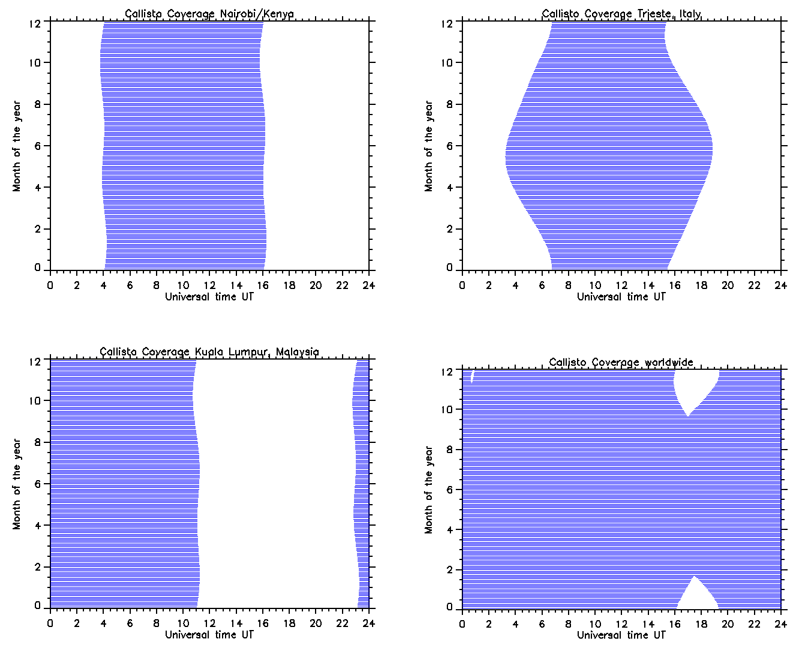
Space weather is very synonymous with the activities of our nearest star, the Sun. Recently; the space weather program has stimulated interest in this issue. The main reason is due to the extreme climate change and towards to the solar maximum at the beginning of 2013. It is believed that the Earth environment has a close connection with Sun activities, such as solar flares and Coronal Mass Ejections (CMEs). However, to prove it is not an easy way. The dynamism of the Sun also still is not easy to be understood. To improve our understanding of the solar activities, a new experimental approach by 24 hours monitoring has been done since 2007 by e-CALLISTO network. This work is a part of International of Space Weather Initiative Program (ISWI). As one of equatorial country, Malaysia also could contribute in terms of a consistent 12 hours monitoring and one of the earliest sites that observe the Sun every day. Here, we will highlight the role of our site, mechanism and implications of Sun activities to the Earth. It is hoped to meet the current knowledge about the Sun with this new method of experimental approach.
Downloads
References
Arzner, K., & Vlahos, L. (2004). Particle acceleration in multiple dissipation regions. The Astrophysical Journal Letters, 605(1), L69.
Aschwanden, M. J., & Benz, A. O. (1997). Electron densities in solar flare loops, chromospheric evaporation upflows, and acceleration sites. The Astrophysical Journal, 480(2), 825.
Baker, D., Balstad, R., Bodeau, J., Cameron, E., Fennel, J., Fisher, G., . . . Lewis, W. (2008). Severe Space Weather Events-Understanding Societal and Economic Impacts. A Workshop Report.
Bastian, T., Benz, A., & Gary, D. (1998). Radio emission from solar flares. Annual Review of Astronomy and Astrophysics, 36(1), 131-188.
Cerruti, A. P., Kintner Jr, P. M., Gary, D. E., Mannucci, A. J., Meyer, R. F., Doherty, P., & Coster, A. J. (2008). Effect of intense December 2006 solar radio bursts on GPS receivers. Space Weather, 6(10), S10D07.
Chen, P. (2011). Coronal mass ejections: models and their observational basis. Living Rev. Solar Phys., 8, 1.
Fleishman, G. D., Gary, D. E., & Nita, G. M. (2003). Decimetric spike bursts versus microwave continuum. The Astrophysical Journal, 593(1), 571.
Gopalswamy, N. (2006). Coronal mass ejections of solar cycle 23. Journal of Astrophysics and Astronomy, 27(2-3), 243-254.
Gopalswamy, N., Yashiro, S., Akiyama, S., Mäkelä, P., Xie, H., Kaiser, M., . . . Bougeret, J. (2008). Coronal mass ejections, type II radio bursts, and solar energetic particle events in the SOHO era. Paper presented at the Annales geophysicae: atmospheres, hydrospheres and space sciences.
Grechnev, V., & Nakajima, H. (2002). An impulsive solar flare accompanied by a cusplike structure in soft X-rays. The Astrophysical Journal, 566(1), 539.
Güdel, M. (1992). The coevolution of decimetric millisecond spikes and hard X-ray emission during solar flares. The Astrophysical Journal, 401, 736-753.
Hamidi, Z., Abidin, Z., Ibrahim, Z., Monstein, C., & Shariff, N. (2012). Signal Detection Performed by Log Periodic Dipole Antenna (LPDA) in Solar Monitoring. International Journal of Fundamental Physical Sciences (IJFPS), 2(2), 24-26.
Hamidi, Z., Ibrahim, Z., Abidin, Z., Maulud, M., Radzin, N., Hamzan, N., . . . Shariff, N. Designing and Constructing Log Periodic Dipole Antenna to Monitor Solar Radio Burst: e-Callisto Space Weather.
Hamidi, Z., Shariff, N., Abidin, Z., Ibrahim, Z., & Monstein, C. (2012). Coverage of Solar Radio Spectrum in Malaysia and Spectral Overview of Radio Frequency Interference (RFI) by Using CALLISTO Spectrometer from 1MHz to 900 MHz. Middle-East Journal of Scientific Research, 12(6), 893-898.
Hudson, H., & Cliver, E. (2001). Observing coronal mass ejections without coronagraphs. Journal of Geophysical Research: Space Physics (1978–2012), 106(A11), 25199-25213.
Kundu, M. R. (2002). Radio observations of high energy solar flares. Highlights of Astronomy, 12, 379-383.
Lanzerotti, L. J. (2005). Solar and solar radio effects on technologies. Solar and Space Weather Radiophysics, 1-16.
Melrose, D. (1997). A solar flare model based on magnetic reconnection between current-carrying loops. The Astrophysical Journal, 486(1), 521.
Messmer, P., Benz, A. O., & Monstein, C. (1999). PHOENIX-2: A New Broadband Spectrometer for Deci-metric and Microwave Radio Bursts–First Results. Solar Physics, 187(2), 335-345.
Pulkkinen, T. (2007). Space weather: terrestrial perspective. Living Reviews in Solar Physics, 4(1).
Rust, D. M., & Webb, D. F. (1977). Soft X-ray observations of large-scale coronal active region brightenings. Solar Physics, 54(2), 403-417.
Schwenn, R. (2006). Space weather: the solar perspective. Living Reviews in Solar Physics, 3(2), 1-72.
Willes, A., & Robinson, P. (1996). Electron-cyclotron maser theory for noninteger ratio emission frequencies in solar microwave spike bursts. The Astrophysical Journal, 467, 465.
Published
Issue
Section
License
Copyright (c) 2013 International Journal of Fundamental Physical Sciences

This work is licensed under a Creative Commons Attribution-NoDerivatives 4.0 International License.


 WorldCat
  Scilit
  ORCID
ORCID  Dimensions
  Mendeley
  Lincoln Library
  Cambridge iDiscover